

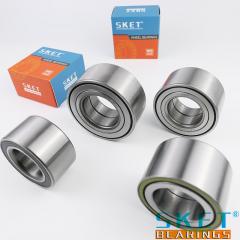
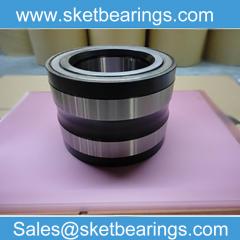
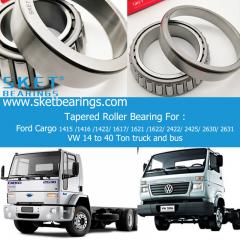
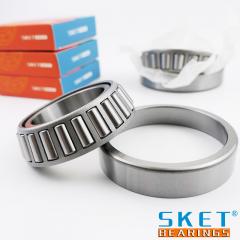
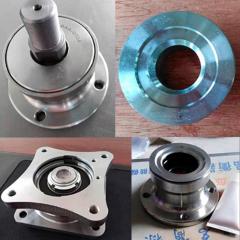
Agricultural bearing procurement is not a simple purchasing decision. It directly affects machine uptime, maintenance cycles, and field reliability under harsh operating conditions. In most cases, total failure cost is significantly higher than the bearing itself.
1. Supplier Capability Determines Field Reliability
In agricultural machinery, bearings are exposed to contamination, shock loads, and misalignment. Supplier manufacturing capability directly determines long-term stability in these environments.
A qualified supplier must maintain full control over heat treatment, grinding accuracy, and sealing system assembly. Even small deviations in material hardness or raceway finish can significantly reduce fatigue life.
2. Manufacturing Consistency and Failure Risk
One of the most common causes of agricultural bearing failure is inconsistency between production batches. This is often related to variations in heat treatment depth, steel cleanliness, and sealing assembly precision.
For OEM applications, even small batch variation can lead to uneven field failure distribution, creating unpredictable warranty exposure.
3. Agricultural Operating Conditions Are Highly Non-Standard

Agricultural equipment operates in environments where standard industrial bearings often fail prematurely.
- Dust, mud, and water contamination entering sealing interfaces
- Shock loads from uneven terrain and soil resistance variation
- Misalignment due to frame deformation under load cycles
- Long idle periods causing corrosion and lubricant separation
These conditions are especially severe in disc harrow and tillage systems, where impact loading and contamination occur simultaneously.
Engineering selection guide: Heavy-Duty Agricultural Bearing Selection Guide
4. Why Sealing Performance Is the Primary Failure Driver
In agricultural environments, sealing failure is more frequent than mechanical overload failure. Once contaminants enter the bearing cavity, lubricant degradation accelerates rapidly, leading to abrasive wear, heat buildup, and raceway damage.
The failure process typically follows a chain reaction: seal wear, contamination ingress, grease breakdown, surface abrasion, fatigue failure.
This is why agricultural bearing design prioritizes sealing geometry, lip pressure stability, and multi-barrier contamination protection systems.
Technical reference: Sealing Performance in Harsh Agricultural Conditions
5. Supplier Comparison: What Actually Differentiates Performance
From an engineering procurement perspective, agricultural bearing suppliers differ mainly in four areas:
- Sealing structure design (single-lip, double-lip, multi-barrier systems)
- Grease retention capability under long idle cycles
- Heat treatment uniformity across production batches
- Dimensional tolerance control in high-volume manufacturing
These differences are often not visible in catalogs but directly determine field reliability and warranty cost.
6. Application Example: Disc Harrow Systems
Disc harrow equipment is one of the most demanding applications in agricultural machinery. Bearings operate under continuous impact, vibration, and soil contamination exposure.
In this environment, sealed agricultural bearing units are required instead of standard industrial bearings, as open or lightly sealed systems fail rapidly under abrasive conditions.
Product reference: Sealed Disc Harrow Bearing Units
7. Tillage Equipment and Impact Load Behavior
Tillage machinery generates repeated shock loading cycles combined with soil resistance variation. If bearing raceway hardness or internal clearance is not properly controlled, fatigue spalling and deformation may occur prematurely.
8. OEM Engineering Requirements Are Increasing
More agricultural OEMs are shifting from catalog-based selection to engineering-based customization. Standard bearing selection is no longer sufficient for modern high-load farming equipment.
Typical requirements include sealing optimization, load reinforcement, lubrication retention, and housing integration design.
OEM solution reference: Customized Agricultural Bearing Solutions for OEM Applications
9. Field Failure Is a System-Level Problem
Agricultural bearing failures are rarely caused by a single defect. They are typically the result of combined system stress from environment, design mismatch, and maintenance limitations.
A failure in one component often reflects issues in sealing design, load assumptions, or installation conditions.
10. Product Application Overview
SKET agricultural bearing solutions are widely used in:
- Disc harrow bearing assemblies
- Tillage machinery systems
- Seeding and harvesting equipment
11. Supplier vs Engineering Partner
A qualified agricultural bearing supplier is not only responsible for delivery, but also for long-term engineering consistency across OEM production cycles.
The difference between a supplier and an engineering partner is often reflected in failure rate stability, not unit price.
Final Conclusion
Agricultural bearing procurement should be evaluated as a system reliability decision rather than a unit price comparison.
The most critical factors remain manufacturing consistency, sealing system design, and application engineering capability. In real field conditions, these factors directly determine downtime risk and total operating cost.
In agricultural machinery, a single bearing failure can lead to downtime costs 10–20 times higher than the bearing itself.