

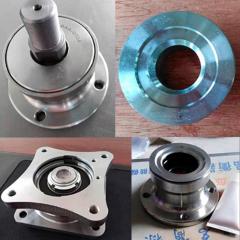
Selecting OEM truck bearings involves more than matching dimensions or comparing quotations. Buyers also need to understand the material specification, heat treatment requirements, load ratings, and inspection evidence used to verify bearing conformity.
For truck manufacturers, parts distributors, importers, and replacement-bearing suppliers, these details help establish whether a bearing matches the intended application and whether its specifications can be verified before bulk orders.
This guide explains the key technical points buyers should review when evaluating OEM truck bearing specifications, discussing requirements with manufacturers, and preparing for repeat orders.
1. What Standards Apply to OEM Truck Bearings?
Bearing standards provide a technical framework for evaluating specific characteristics, but they do not automatically define every requirement for an OEM truck bearing.
These standards help explain how bearing load ratings and rating life are determined. However, they should not be treated as complete product specifications for every truck bearing.
An OEM specification may also define dimensions, tolerances, internal clearance, material requirements, heat treatment, sealing configuration, lubrication, inspection methods, and acceptance criteria. The applicable requirements depend on the bearing design, application, and customer specification.
When reviewing a bearing quotation or technical datasheet, buyers should distinguish between three types of information:
| Information | What to verify |
|---|---|
| General bearing standards | Which standard applies and what characteristics it covers |
| OEM or approved product specifications | Required dimensions, design features, materials, and acceptance criteria |
| Supplier inspection records | Which characteristics were inspected, how results were recorded, and whether they meet the agreed requirements |
A reference to an international standard alone does not establish that a bearing meets every OEM requirement. Buyers should confirm the applicable standard, edition, product specification, and agreed inspection criteria.
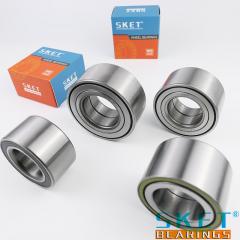
For product identification and sourcing, explore SKET's truck wheel hub bearings.
2. How Does Bearing Material Affect Truck Bearing Performance?
Bearing steel is an important part of the specification because material composition and quality influence the properties that can be achieved through processing and heat treatment.
Common bearing steel designations include SAE 52100, 100Cr6, and GCr15. These designations belong to different standards or designation systems. Buyers should not assume that two designations are fully interchangeable without checking the applicable material standards and technical requirements.
When reviewing an OEM truck bearing, consider the following points.
Material grade and specification
Confirm the required material designation and the standard against which it is specified. Where substitution is proposed, request technical confirmation that the alternative meets the relevant requirements.
Material verification
Depending on the purchase specification, verification may involve a material certificate, chemical composition information, or other agreed inspection evidence. The document should be relevant to the material and order being supplied.
Batch identification and traceability
Ask how material information is linked to production batches and how the manufacturer can investigate a potential quality issue. Traceability requirements should be defined before production when they are important to the customer.
Consistency between orders
For repeat purchases, buyers should confirm that the approved material specification remains controlled across subsequent batches. Any proposed material or process change should be handled through the agreed change-control procedure.
Material grade is only one part of bearing quality. It does not, by itself, confirm the finished bearing's dimensional accuracy, internal geometry, heat treatment quality, load rating, or suitability for a particular truck application.
3. How Can Buyers Verify Heat Treatment Quality?
Heat treatment influences the hardness, microstructure, and other material properties required by a bearing design. In rolling bearings, these characteristics must be controlled in accordance with the applicable material, manufacturing, and product requirements.
For OEM buyers, the key question is not simply whether a manufacturer performs heat treatment. It is whether the required results can be verified against agreed specifications.
Check the applicable acceptance criteria
Confirm which heat treatment characteristics are specified for the bearing. Depending on the design and requirements, these may include hardness, microstructure, effective hardened depth where applicable, and dimensional stability.
There is no single hardness value or heat treatment acceptance range that should be applied indiscriminately to every truck bearing. Requirements depend on the material, component, design, and applicable specification.
Review inspection methods and records
Ask how relevant characteristics are measured, where measurements are taken, and how inspection frequency and sampling are defined. The test method and acceptance criteria should be appropriate to the characteristic being evaluated.
A reported measurement is useful only when its meaning can be understood in the context of the specification and inspection method.
Confirm production consistency
For repeat or bulk orders, buyers should understand how the manufacturer controls the approved process and manages deviations. Where required, heat treatment records should be traceable to the relevant production batch.
A heat treatment report can support quality verification, but its value depends on the information it contains, the scope of inspection, and its relationship to the supplied product.
Before approving a supplier, clarify which heat treatment evidence is available for the specific bearing and which records can be provided under the agreed purchasing requirements.
4. How to Read Truck Bearing Load Ratings
Load ratings help buyers and engineers evaluate bearing load-carrying capability, but they must be interpreted correctly. They are not interchangeable with the maximum load that a bearing can safely carry under every operating condition.
Three terms are particularly important.
| Term | Meaning | What buyers should understand |
|---|---|---|
| C | Basic dynamic load rating | A rating used in dynamic load and rating-life calculations under the applicable standard |
| C₀ | Basic static load rating | A rating used to evaluate static loading and static equivalent load under the applicable standard |
| L₁₀ | Basic rating life | The life associated with 90% reliability for a sufficiently large group of apparently identical bearings operating under the specified assumptions |
The basic rating life is a statistical measure, not a guarantee that every bearing will reach a particular service life. Actual results depend on operating conditions and other factors that may not be fully represented by a basic rating-life calculation.
Dynamic load rating: C
The basic dynamic load rating is used in bearing-life calculations for bearings operating under the conditions covered by the applicable standard.
It should not be interpreted as the maximum permissible operating load. Bearing selection also depends on the actual load spectrum, speed, operating hours, lubrication, contamination, mounting conditions, and application requirements.
Static load rating: C₀
The basic static load rating is relevant when evaluating stationary or slowly moving bearings and conditions in which permanent deformation at the rolling contacts is a concern.
It should not be treated as a universal maximum service load. The static equivalent load and the relevant application conditions must also be considered.
Basic rating life: L₁₀
Basic rating life is commonly expressed in millions of revolutions. For a sufficiently large group of apparently identical bearings operating under the specified conditions, the basic rating life is associated with 90% reliability.
This is a statistical definition rather than a guaranteed replacement interval. It does not account for every possible cause of premature bearing failure, such as incorrect installation, inadequate lubrication, contamination, corrosion, or application mismatch.
Why model-specific data matters
Two bearings with similar external dimensions may have different internal designs, materials, clearances, or load ratings. Buyers should therefore verify the exact bearing designation and the relevant technical data rather than selecting a replacement based on dimensions alone.
When comparing supplier datasheets, confirm that the values refer to the same bearing configuration and that the rating definitions and units are consistent. If the bearing is intended for a specific truck wheel-end application, suitability should be evaluated against the actual operating and mounting requirements.
5. How Should OEM Buyers Verify Bearing Specifications Before Bulk Orders?
Once the required technical characteristics are understood, buyers need to establish whether the supplier can provide sufficient evidence to evaluate the proposed bearing.
A practical review should focus on three areas.
Confirm the approved specification
Check the bearing designation, drawing or dimensional data, relevant tolerances, configuration, and application requirements. For replacement projects, provide the original bearing reference or OEM/OE reference where available.
If the proposed bearing differs from the original specification, request a technical comparison and confirmation of suitability before approving the substitution.
Review relevant quality evidence
Depending on the purchase agreement, useful records may include:
-
Product drawings and specification sheets
-
Dimensional inspection records
-
Material certificates or other agreed material evidence
-
Heat treatment inspection records, where applicable
-
Final inspection reports
-
Batch identification and traceability information
Not every order requires every document listed above. Buyers should define the required documents, inspection scope, and acceptance criteria before placing the order.
A report's title alone is not proof of conformity. Review what was measured or tested, the acceptance limits, and whether the results correspond to the agreed product specification and supplied batch.
Establish a reference for repeat orders
For ongoing supply, confirm how the approved specification, drawing revision, product configuration, and inspection requirements will be maintained. If samples are required, agree on what needs to be checked and how approval will be documented before bulk production.
These steps help create a clear technical reference for future orders and reduce ambiguity when specifications or production requirements change.
For a broader supplier-selection framework covering manufacturing responsibility, production control, and supplier verification, read Truck Bearing Manufacturer in China: How Global Buyers Evaluate Suppliers Before Ordering.
6. What Information Should Buyers Prepare for an OEM Truck Bearing RFQ?
An accurate request for quotation starts with clear product identification and purchasing requirements. Providing the following information helps the supplier assess the request and identify any missing technical details.
Bearing identification
-
Bearing model or part number
-
OEM/OE reference, if available
-
Drawing or key dimensions, if available
Application
-
Truck model or vehicle application
-
Wheel-end position or installation location, where relevant
-
Replacement requirements and known operating conditions
Order requirements
-
Required quantity and expected order frequency
-
Destination country
-
Packaging or marking requirements
-
Required inspection documents or material records
If the exact bearing designation is unknown, a drawing, clear product photographs, dimensions, and application details may help with initial identification. However, dimensions alone may not be sufficient to confirm a technically equivalent replacement.
Request an OEM Truck Bearing Quote from SKET
If you are sourcing truck bearings for OEM production, aftermarket distribution, or replacement applications, provide the bearing reference and available technical information so the requirements can be reviewed before quotation.
To help clarify your request, include the bearing number or OEM/OE reference, application, required quantity, destination country, and any drawing or documentation requirements.
Contact SKET to Discuss Your Truck Bearing Requirements
The specific product configuration, technical data, inspection evidence, and supply requirements should be confirmed for the bearing and order under consideration.
Frequently Asked Questions
What documents should buyers request for OEM truck bearings?
The appropriate documents depend on the product specification and purchase agreement. Buyers may request drawings, dimensional inspection records, material information, heat treatment records where applicable, final inspection reports, and batch traceability information. Confirm the required scope before placing the order.
Can two truck bearings with the same dimensions have different load ratings?
Yes. Bearings with similar or identical external dimensions may differ in internal design, materials, internal geometry, or other specifications that affect their load ratings. Verify the exact bearing designation and technical data rather than relying on dimensions alone.
What information is needed to request an OEM truck bearing quote?
Start with the bearing model or OEM/OE reference, required quantity, application, and destination country. A drawing, dimensional data, and documentation requirements can help clarify the technical scope. If the part number is unknown, provide as much reliable identification information as possible.
Do ISO load-rating standards guarantee truck bearing service life?
No. ISO load-rating and rating-life methods provide a defined technical basis for evaluating specified bearing characteristics. Actual service life depends on operating conditions, application suitability, lubrication, contamination, installation, and other factors. Compliance with a relevant standard should not be interpreted as a guarantee of a particular service life.