

Warranty claims can create costs well beyond the price of a replacement truck bearing. Distributors may need to manage customer complaints, investigate failures, arrange replacement shipments, handle labor-related disputes, and protect relationships with fleet operators and repair workshops.
Many avoidable claims can be reduced before a bearing reaches the customer. Accurate product identification, clear purchasing specifications, consistent supplier quality control, and reliable batch records help distributors prevent sourcing errors and resolve problems with less uncertainty.
This guide explains how truck bearing distributors can reduce warranty claims through better purchasing decisions, evidence-based failure investigation, and continuous supplier evaluation.
1. Understand the True Cost of Warranty Claims
A warranty claim affects more than the cost of replacing a bearing. For distributors, the total impact may include:
-
Replacement product and freight costs
-
Inspection, handling, and administrative time
-
Customer service and technical investigation
-
Returns processing and potential credit adjustments
-
Lost sales or reduced customer confidence
The impact becomes more difficult to manage when the distributor cannot identify the affected batch, verify the original specification, or determine whether the reported failure is related to the bearing or its operating conditions.
The first step toward reducing claims is therefore to distinguish between preventable sourcing errors, potential product quality issues, and failures that require further technical investigation.
Distributors should track warranty claims by bearing model, supplier, batch where available, application, failure type, and claim outcome. This creates a useful record for identifying recurring problems and improving future purchasing decisions.
2. Identify Potential Causes Before Assigning Responsibility
A failed truck bearing does not automatically indicate a manufacturing defect. Similar symptoms can result from different causes, so distributors should gather relevant information before deciding whether a claim should be attributed to the product, installation, application, or operating environment.
Common factors to investigate include:
Incorrect bearing selection or replacement
A bearing may have the wrong dimensions, internal design, clearance, sealing arrangement, or other specification for the intended application. Similar external dimensions do not necessarily establish technical interchangeability.
Installation and mounting conditions
Incorrect mounting methods, unsuitable fitting tools, excessive force, or damage to associated shaft and housing surfaces can affect bearing performance.
Lubrication and contamination
Unsuitable lubrication, inadequate lubrication, water ingress, dirt, or other contaminants may contribute to premature wear and surface damage.
Operating conditions
Actual loads, shock loading, misalignment, vibration, operating temperature, and duty cycle may differ from the conditions assumed during bearing selection.
Potential product quality issues
Dimensional nonconformity, surface defects, material-related problems, or inconsistencies with the agreed specification may require further examination and comparison with production or inspection records.
These are investigation categories, not automatic conclusions. For example, raceway damage may justify closer inspection, but the appearance of a damaged bearing alone may not establish when the damage occurred or who is responsible.
For distributors, the practical objective is to identify which evidence is needed to distinguish between these possibilities before making a warranty decision.
For additional background on failure symptoms, see Truck Wheel Bearing Failure Symptoms and Warning Signs.
3. Verify Bearing Specifications Before Ordering
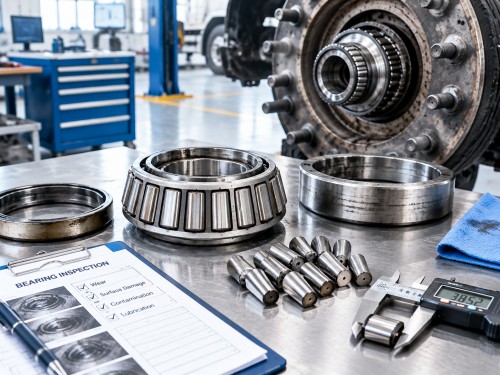
Checking specifications before placing an order is one of the most direct ways to prevent avoidable warranty claims. A product that looks similar to the original bearing may still be unsuitable if its technical configuration does not match the application.
Before ordering replacement truck bearings, distributors should verify the following information.
Bearing identification
Confirm the bearing number, OEM or OE reference where available, and any relevant drawing or application information. If the reference is unclear, request additional technical details instead of relying on appearance alone.
Dimensions and design
Check the bore, outside diameter, width, bearing type, and relevant design features. Depending on the application, internal clearance, sealing arrangement, and other technical characteristics may also need confirmation.
Application compatibility
Confirm the intended vehicle or wheel-end application and any relevant operating requirements. A dimensional match alone does not prove that a replacement is technically equivalent.
Order and packaging requirements
Specify the required quantity, product marking, packaging, and any documentation needed for receiving inspection or downstream traceability.
Approval of changes
For repeat orders, confirm whether the approved specification, drawing revision, or product configuration has changed. Any proposed substitution should be reviewed before the product is accepted for the intended application.
These checks are particularly important for distributors managing multiple bearing references across different truck models or customer requirements.
When a specification is uncertain, resolving the uncertainty before purchase is generally more manageable than handling a claim after installation.
4. Evaluate Supplier Quality and Batch Traceability
A supplier's ability to provide consistent products and relevant inspection evidence helps distributors reduce uncertainty when purchasing truck bearings in volume.
Price and delivery time matter, but they should not be the only criteria. Distributors should also understand how the supplier controls the agreed product specification and supports investigations when a quality concern arises.
Key points to review include:
Product and process consistency
Confirm how the supplier maintains the approved bearing design and manages changes to materials, manufacturing processes, or product configuration where these are relevant to the order.
Inspection scope
Ask which characteristics are inspected and whether the inspection methods and acceptance criteria match the agreed specification. Depending on the product and purchasing requirements, relevant evidence may include dimensional inspection results, material information, heat treatment records, final inspection reports, or other agreed documentation.
Batch identification
Determine how supplied products are identified and whether available production or inspection records can be linked to the relevant batch or shipment.
Nonconformity handling
Clarify how the supplier reviews reported problems, what evidence is needed, how findings are communicated, and how corrective actions are documented when a confirmed issue requires them.
Repeat-order control
For ongoing supply, confirm how the supplier maintains specification consistency between orders and communicates relevant changes.
Not every order requires the same documentation. The appropriate inspection scope and records should be agreed in advance according to the bearing, application, and purchasing requirements.
For distributors, effective traceability helps narrow an investigation to the relevant product and supply records instead of treating every complaint as an isolated event.
For a broader supplier-evaluation framework, see Truck Bearing Manufacturer in China: How Global Buyers Evaluate Suppliers Before Ordering.
5. Investigate Warranty Claims with Documented Evidence
A consistent claim-handling process helps distributors make decisions based on verifiable information, reduces unnecessary back-and-forth communication, and makes it easier to identify recurring problems.
Use the following five steps when a customer reports a truck bearing failure.
Step 1: Register the claim
Create a claim record that includes:
-
Customer and claim reference
-
Bearing model or part number
-
Supplier and available batch or shipment identification
-
Purchase date and installation date, if known
-
Reported failure symptoms
-
Quantity affected and requested resolution
Record the customer's description separately from any confirmed technical findings.
Step 2: Collect installation and operating information
Request the information needed to understand the reported failure, including:
-
Vehicle model and bearing application
-
Installation method and available maintenance records
-
Operating time or mileage, if known
-
Relevant load, temperature, or operating conditions
-
Lubrication and contamination observations
-
Photographs, inspection findings, or repair reports
If information is unavailable, mark it as missing rather than treating an assumption as a confirmed fact.
Step 3: Inspect the returned bearing
Where a return or technical inspection is appropriate, document the bearing's condition before cleaning, disassembly, or further handling.
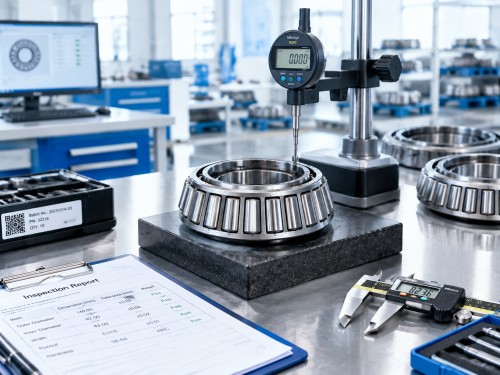
Record relevant observations such as raceway condition, rolling-element damage, surface wear, discoloration, contamination, and visible damage to associated components. Photographs and inspection notes help preserve a consistent record.
If the bearing has been heavily damaged or altered after removal, document that limitation because it may restrict the conclusions that can be drawn.
Step 4: Compare findings with the agreed specification
Review the inspection findings alongside the product drawing or specification, applicable acceptance criteria, and available supplier inspection records.
Where relevant, compare the returned product with retained samples or other products from the same batch. Any comparison should use an appropriate reference and inspection method.
The purpose is to determine whether there is evidence of a product nonconformity, whether the available information points to another contributing factor, or whether further investigation is required.
Step 5: Document the decision and follow-up
Record the claim outcome, the evidence supporting the decision, any unresolved questions, and the agreed next action.
Depending on the findings and applicable warranty terms, the next step may involve replacement, credit, additional testing, further technical review, or rejection of a claim where the available evidence does not support it.
If a product or process issue is confirmed, document the corrective action and identify whether other products or batches may need review. If the evidence remains inconclusive, state that clearly rather than assigning responsibility without sufficient support.
A documented process gives distributors a repeatable basis for handling claims and helps prevent the same dispute from being investigated from scratch each time.
6. Manage Cross-Border Truck Bearing Supply
For distributors importing truck bearings, cross-border supply adds coordination requirements that can affect both customer service and warranty handling. Shipping records, product identification, inventory allocation, and communication between the distributor and supplier all influence how efficiently a problem can be investigated.
Several practices can help control these risks.
Keep shipment and product records connected
Retain purchase orders, invoices, packing lists, shipment references, and available batch information. Where possible, maintain a clear link between incoming shipments and the inventory supplied to individual customers.
Maintain practical inventory records
Record bearing model, supplier, receipt date, and available batch or shipment identifiers. This helps distributors identify potentially affected stock and review the scope of a reported issue.
Agree on documentation before shipment
Confirm the required product labels, packaging, inspection documents, and other order-specific requirements before dispatch. This reduces avoidable discrepancies during receiving inspection and later claim reviews.
Set a clear communication process
Agree on the information required to submit a claim, the appropriate technical contact, and how inspection findings and proposed actions will be communicated. For international transactions, written records help keep all parties aligned when a case involves multiple organizations.
Review lead times and replacement arrangements
Understand the expected replenishment process and how urgent replacement requirements will be handled. Keeping suitable stock of frequently requested references may help distributors respond to customers, depending on demand and inventory costs.
These practices are relevant to South American markets, including distributors serving customers in Brazil and Argentina, as well as other international markets. Specific customs, documentation, and transport requirements should be confirmed for the destination and shipment rather than assumed to be identical across countries.
Cross-border coordination cannot eliminate bearing failures, but it can reduce avoidable delays, improve traceability, and make claim handling more predictable.
7. Analyze Recurring Claims to Improve Supplier Decisions
Closing an individual claim is not the end of the process. Distributors can use claim records to identify patterns and improve product selection, supplier evaluation, and inventory decisions.
Review warranty data periodically by:
-
Bearing model or part number
-
Supplier and available batch identification
-
Reported failure type
-
Application or customer segment
-
Time or mileage in service, where known
-
Claim outcome and confirmed cause, if established
Look for repeated patterns rather than drawing conclusions from a single complaint. For example, several reports involving the same reference may justify checking application compatibility, product specifications, installation information, or supplier inspection records. A cluster of complaints from one application may indicate that operating conditions or replacement selection deserve closer review.
Where a recurring issue is supported by evidence, define a follow-up action. This may include revising purchasing checks, clarifying application information with customers, reviewing supplier performance, improving batch records, or requesting a documented corrective-action response.
It is also important to distinguish confirmed product nonconformities from claims with unknown or unrelated causes. Combining all claims into a single failure category can lead to incorrect supplier evaluations and ineffective corrective actions.
Over time, a structured review helps distributors make better sourcing decisions and focus quality investigations on the areas where evidence indicates the greatest need.
Work with a Truck Bearing Supplier That Supports Consistent Sourcing
Reducing truck bearing warranty claims requires more than responding to failures after they occur. Distributors need accurate product identification, clear purchasing requirements, consistent supply, and traceable records that support effective investigation when problems arise.
SKET supports truck bearing sourcing for replacement and bulk purchasing requirements. Distributors can provide their bearing references, application details, required quantities, and destination information to discuss product identification and supply requirements.
To help assess your requirements, include:
-
Bearing model or OEM/OE reference
-
Truck or wheel-end application
-
Required quantity
-
Destination country
-
Relevant drawing or documentation requirements
Contact SKET to Discuss Your Truck Bearing Requirements
The appropriate product specification, available inspection evidence, and supply arrangements should be confirmed for each bearing and order.